

prof. dr hab. Mariusz Majdański
mmajd@igf.edu.pl
Department of Geophysical Imaging


Completed projects: 0 Total share value: 0 PLN
The Institute of Geophysics, Polish Academy of Sciences (IGF PAS), takes an active part in international research projects, working together with leading scientific centers worldwide. We explore physical processes on Earth and beyond – from the planet’s interior, through the atmosphere and oceans, to outer space. These projects bring together knowledge, technology, and experience. Thanks to programs such as Horizon Europe, COST, ERA-NET, and EIT Climate-KIC, as well as partnerships with institutes in Europe, North America, and Asia, we carry out interdisciplinary research that tackles global challenges – from climate change to seismic risks.
prof. dr hab. Mariusz Majdański
mmajd@igf.edu.pl
Department of Geophysical Imaging
Project value: 368 520,00 EUR
Funding institution Horizon Europe
Project duration: 2022-2026

The Geo-INQUIRE project is realised at the Institute of Geophysics of the Polish Academy of Sciences under the supervision of Prof. Mariusz Majdański (WP9 leader), as part of the Horizon Europe program (HORIZON-INFRA-2021-SERV-01). The project leader is the German GFZ, and the entire team consists of
51 research institutions from 13 European countries.
The project aims to provide and improve access to data, products, and services related to processes in the geosphere. It also aims to support the monitoring and modelling of geophysical processes with greater accuracy and precision. Geo-INQUIRE aims to bridge the gap between individual disciplines involved in research in the Earth sciences, particularly in land, marine, and atmospheric sciences. The project utilizes innovative data management techniques, modelling and simulation methods, the development of artificial intelligence, and large data sets. It also enhances existing data infrastructure to disseminate resources
to the broader scientific community active in the European Open Science Cloud (EOSC). One element of this infrastructure is the infrastructure managed by the Thematic Core Service on Anthropogenic Hazards (TCS AH), the core of which is the EPISODES Platform.
WP9, led by Prof. Majdański, is responsible for organizing training courses, workshops, hackathons, and summer schools related to the project’s research infrastructure. It also organizes and funds research visits for young scientists, supporting exchange and networking across geoscience disciplines.

dr Zuzanna Świrad
zswirad@igf.edu.pl
Department of Polar and Marine Research
Project value: 46 647 EUR
Funding institution: European Space Agency (ESA)
Project duration: 2024-2026

The HIRLOMAP project focuses on high-resolution monitoring of coastal sea ice and icebergs in the Arctic. By combining advanced satellite data, it provides accurate information for ship navigation, community safety, and the protection of Arctic coastlines.
dr hab. Janusz Jarosławski
jjaroslawski@igf.edu.pl
Zakład Fizyki Atmosfery
Project value: 543 550 PLN
Funding institution: National Centre for Research and Development (NCBR)
Project duration: 2021-2025
Project type: development and implementation

As part of the project, interdisciplinary research will be carried out to evaluate the self-cleaning efficiency of the developed elements and their impact on air purification, focusing on nitrogen oxides, ozone, and benzene. A dedicated testing setup will be used, and the solutions will be validated at two field sites with different air pollution profiles – in the city center of Warsaw and near the S7 expressway outside the city. The main results will include practical conditions and recommendations for the production and use of innovative photocatalytic self-cleaning composites designed to improve air quality in temperate transitional climates. Implementing this technology, especially near emission sources, will significantly enhance air quality in urban areas and along major transport routes.
prof. dr hab. Stanisław Lasocki
slasocki@igf.edu.pl
Department of Seismology
Project value: 5 125 550 PLN
Funding institution: National Centre for Research and Development (NCBR)
Project duration: 2024-2028
TCS AH (Thematic Core Service for Anthropogenic Hazards) is a 2024–2028 project led by IGF PAS as part of the EPOS ERIC infrastructure. It integrates data and software for studying seismic and other geophysical hazards caused by human activity. The project connects data centers and the EPISODES platform, supporting research across 15 institutions in 9 countries.
prof. dr hab. Beata Orlecka – Sikora
borlecka@igf.edu.pl
Department of Seismology
Project value: 1 568 918,74 PLN
Funding institution: Horizon Europe
Project duration: 2022-2025
DT-GEO develops a prototype digital twin for geophysical extremes, including earthquakes, volcanoes, tsunamis, and human-induced events. Using advanced simulations, AI, and real-time data, it provides precise forecasts, hazard assessments, and “what-if” scenarios. The project integrates cutting-edge European research infrastructures and demonstrator sites, paving the way for future integration with the Destination Earth (DestinE) initiative.
dr hab. Janusz Jarosławski
jjaroslawski@igf.edu.pl
Department of Atmospheric Physics
Project value: 321 812,50 PLN
Funding institution: National Centre for Research and Development (NCBR)
Project duration: 2023-2026
Project type: development and implementation

The project develops innovative self-cleaning prefabricated railway platform elements made of photocatalytic concrete to improve air quality. Large slabs and surface panels will be tested for effectiveness in removing nitrogen oxides and other pollutants. The results will provide guidelines for production and application, enhancing air quality and passenger comfort on Polish railways.
dr hab. Mateusz Moskalik
mmoskalik@igf.edu.pl
Department of Polar and Marine Research
Project value: 483 000 PLN
Funding institution: Ministry of Education and Science
Project duration: 2022-2026
ARGO Poland is the national component of the European Euro-ARGO Roadmap. The European network includes several thousand autonomous drifting devices across all oceans, measuring temperature, salinity, and other seawater parameters. These measurements are analogous to meteorological stations on land and are essential for monitoring ocean conditions and producing weather forecasts. Since 2022, IGF PAS has been a partner in the national component. The Institute’s work focuses on testing ARGO floats in polar fjords, pioneering efforts to extend measurements beyond the open ocean to shallow seas and polar regions. Research is carried out in collaboration with the Stanisław Siedlecki Polish Polar Station in Hornsund Fjord, including anchoring measurement floats in front of glaciers flowing into the sea.
prof. dr hab. Piotr Głowacki
pglowacki@igf.edu.pl
Department of Polar and Marine Research
Project value: 50 000 NOK
Funding institution: SIOS Svalbard integrated arctic earth observing system
Project duration: 2023-2025

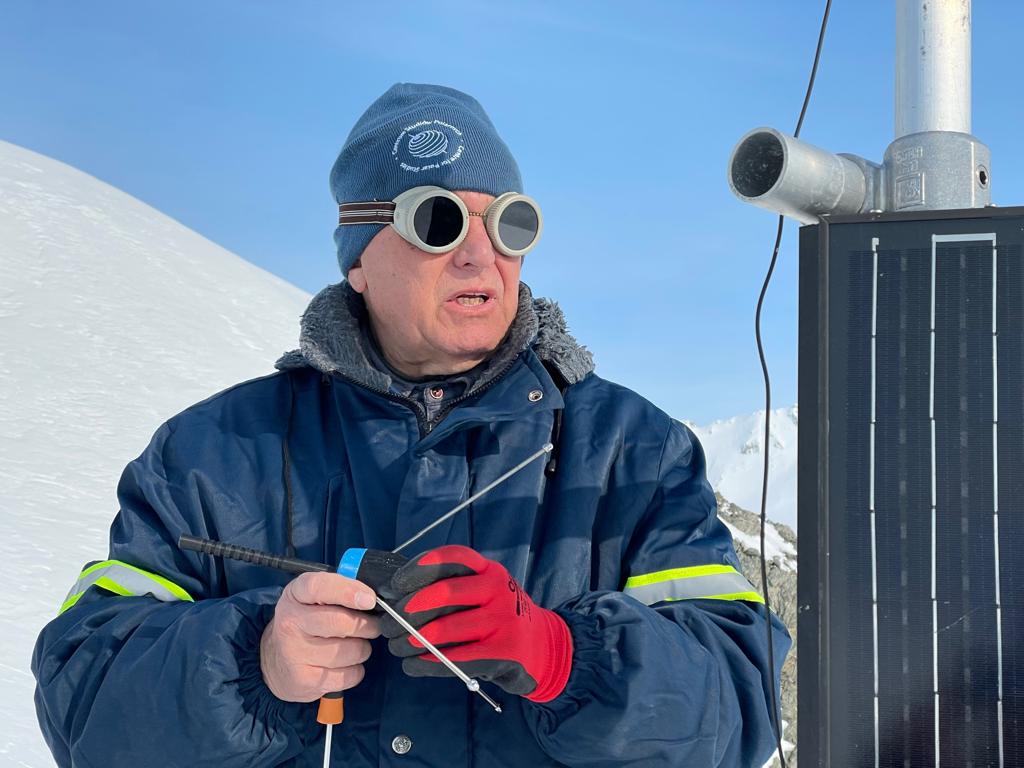
AutoStake is a project carried out on Spitsbergen by four partner institutions from Norway, Sweden, and Poland – the Norwegian Polar Institute, University of Svalbard, Uppsala University, and IGF PAS – funded through the Optimised Call by the Svalbard Integrated Earth Observing System consortium. AutoStake introduces an innovative approach for continuous measurement of key glacier parameters, including snow and ice accumulation, melt, and ice flow velocity, with real-time data transmission via satellites. Traditional glacier monitoring is labor-intensive, costly, and often limited to two seasonal campaigns, which is insufficient for accurate modeling of mass balance and glacier dynamics. The automatic stations reduce logistical and carbon footprints and allow uninterrupted data collection even under hazardous conditions or during disruptions such as the COVID-19 pandemic. Data are transmitted daily via Iridium satellites to external servers and made available online, while an energy management system ensures the stations operate efficiently year-round using solar panels and batteries.
dr Kseniia Bodnar
kbodnari@igf.edu.pl
Department of Magnetism
Project value: 2 453 400,00 PLN
Funding institution: United States of America
Project duration: 2023-2026
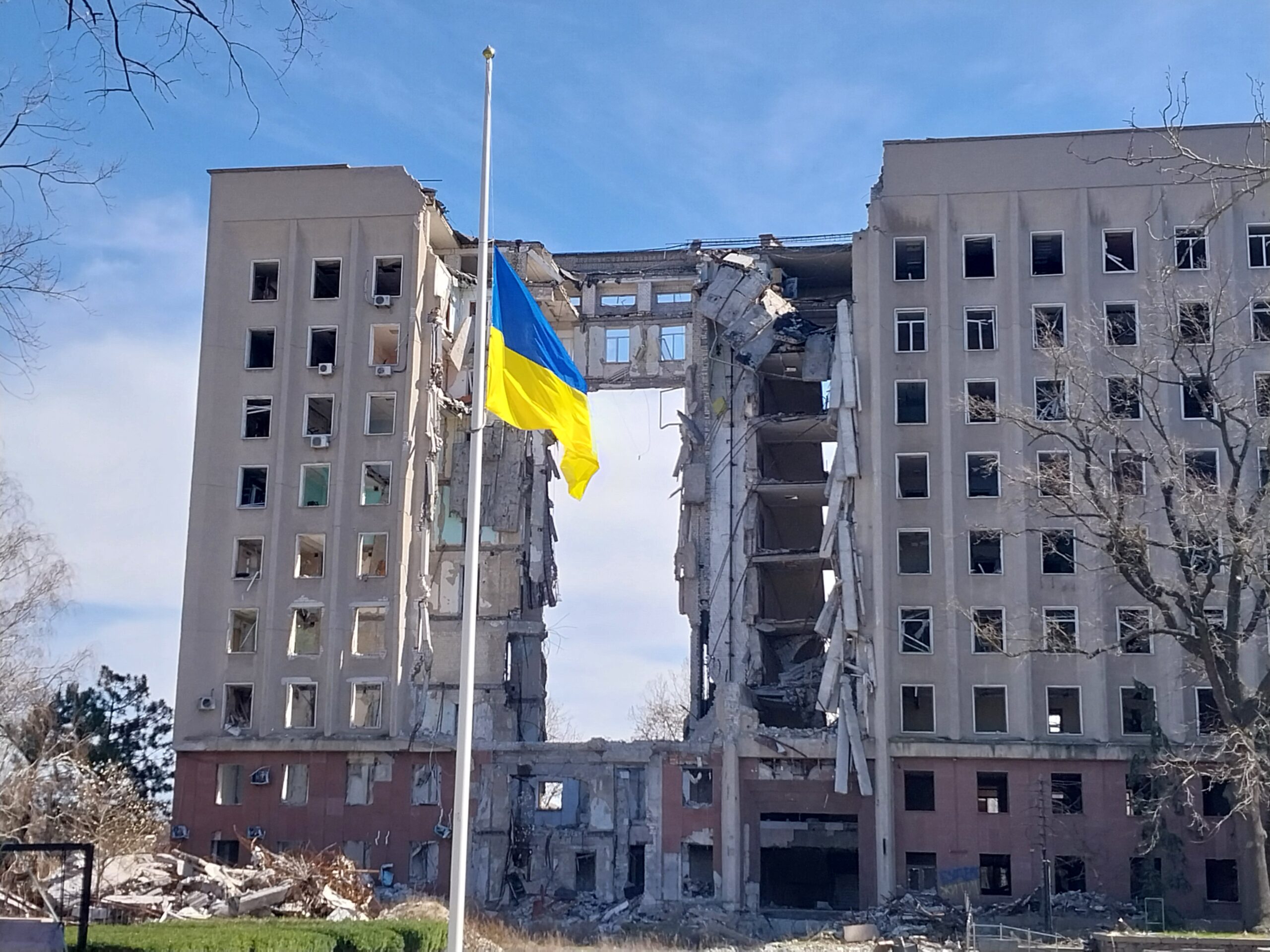
Military activity contributes to environmental pollution, which needs to be properly assessed. Large areas in Ukraine undergo missile attacks and artillery shelling, resulting in contamination of land, air and water with unexploded ordnance, weapon residue, organic and inorganic harmful substances, including heavy metals. We use the magnetic method as a tool for quantification of soil pollution with military-related emissions in agricultural and urban areas affected by war. The action plan includes in-situ magnetometer surveys and magnetic susceptibility mapping, soil sampling and laboratory magnetic and geochemical measurements.
dr hab. prof. PAN Aleksander Pietruczuk
apietruczuk@igf.edu.pl
Department of Atmospheric Physics
Project value 1 652 048,80 PLN
Funding institution: Intermediary Institution – National Information Processing Institute (OPI – PIB)
Project duration: 2025-2029
Project type: development and implementation
ACTRIS (Aerosols, Clouds, and Trace Gases) is a pan-European research infrastructure for studying aerosols, clouds, and trace gases. It consolidates European observational efforts to better understand atmospheric processes and provides access to high-quality data, laboratories, and training for the scientific community. ACTRIS supports researcher mobility, knowledge exchange, and technological development while contributing to public health, climate resilience, and air pollution reduction. In Poland, ACTRIS focuses on aerosol measurements, cloud studies, and their interactions, including impacts on ecosystems.
dr hab. prof. PAN Aleksander Pietruczuk
apietruczuk@igf.edu.pl
Department of Atmospheric Physics
Project value: 4 768 215,41 PLN
Funding institution: Ministry of Science and Higher Education
Project duration: 2024-2028
Project type: development and implementation
The Infrastructure for the Study of Aerosols, Clouds, and Trace Gases supports Poland’s participation in the pan-European ACTRIS research infrastructure, providing high-quality data on short-lived atmospheric components from both natural and controlled sources. Data are collected from observational platforms, stationary and mobile observatories, and research laboratories, and are accessible through the ACTRIS Data Centre, which also provides online analysis tools. These data are used in scientific research, education, and air quality modeling by national environmental authorities. As a founding member of ACTRIS ERIC, Poland actively develops and operates observational platforms nationwide. The project is implemented by the Polish ACTRIS consortium, led by IGF PAS, and covers six stationary measurement stations, one mobile observatory, and a central laboratory, integrating in-situ and remote sensing techniques under coordinated research and management tasks.
mgr Anna Leśnodorska
alesnodorska@igf.edu.pl
Department of Seismology
Project value: 76 250 EURO
Funding institution: Horizon Europe
Project duration: 2024-2027
EPOS ON strengthens and evolves the European Plate Observing System (EPOS), providing open access to high-quality solid Earth data, products, and services. The project expands EPOS services, fosters scientific collaborations, and supports early-career researchers, while bridging science and industry through knowledge and technology transfer. By unifying communities and countries, EPOS ON enhances the impact of European solid Earth research.
dr hab. Mateusz Moskalik
mmoskalik@igf.edu.pl
Department of Polar and Marine Research
Project value: 86 740,00 EURO
Funding institution: European Research Executive Agency (REA)
Project duration: 2024-2029

Polar regions play a key role in the Earth system, influencing climate, human expansion, and resource exploration. Rapid changes in polar ice, oceans, and land have global consequences, affecting people worldwide. Access to world-class research infrastructure is essential to understand and predict these critical processes, but polar areas are remote and infrastructure is limited. POLARIN is an international network of polar research infrastructures and services designed to address scientific challenges in polar regions. The network integrates complementary, high-level Arctic and Antarctic research stations, research vessels and icebreakers, observatories, data infrastructures, and ice and sediment core repositories, providing coordinated access for interdisciplinary research on complex polar processes.
dr Bartłomiej Luks
luks@igf.edu.pl
Department of Polar and Marine Research
Project value: 668 750,00 EURO
Funding institution: European Climate, Infrastructure and Environment Executive Agency (CINEA)
Project duration: 2025-2029

Recognizing the crucial role of snow, ice, and permafrost in the global climate system, the LIQUIDICE project brings together expert cryospheric observers and modelers to reassess the past and future impacts of climate change on vulnerable regions. The project focuses on the Greenland ice sheet, permafrost areas, and key climate-sensitive locations across the Alps, Norway, High Mountain Asia (HMA), and Svalbard. The project will deliver dataset on snow water equivalent and surface reflectivity (albedo) from Earth Observation data, assessments of model resolution and coupling impacts on climate predictions, improved projections of freshwater fluxes from glaciers, ice caps, and the Greenland ice sheet to oceans and sea-level rise, hydrological simulations for water availability in High Mountain Asia, a framework to assess water discharge risks in climate-sensitive regions, and socio-economic analyses on climate change impacts and adaptation strategies for water resource management.
dr hab. Michał Pętlicki
petlicki@igf.edu.pl
Department of Hydrology and Hydrodynamics
Project value: 220 000 NOK
Funding institution: SIOS Svalbard integrated arctic earth observing system
Project duration: 2023-2025
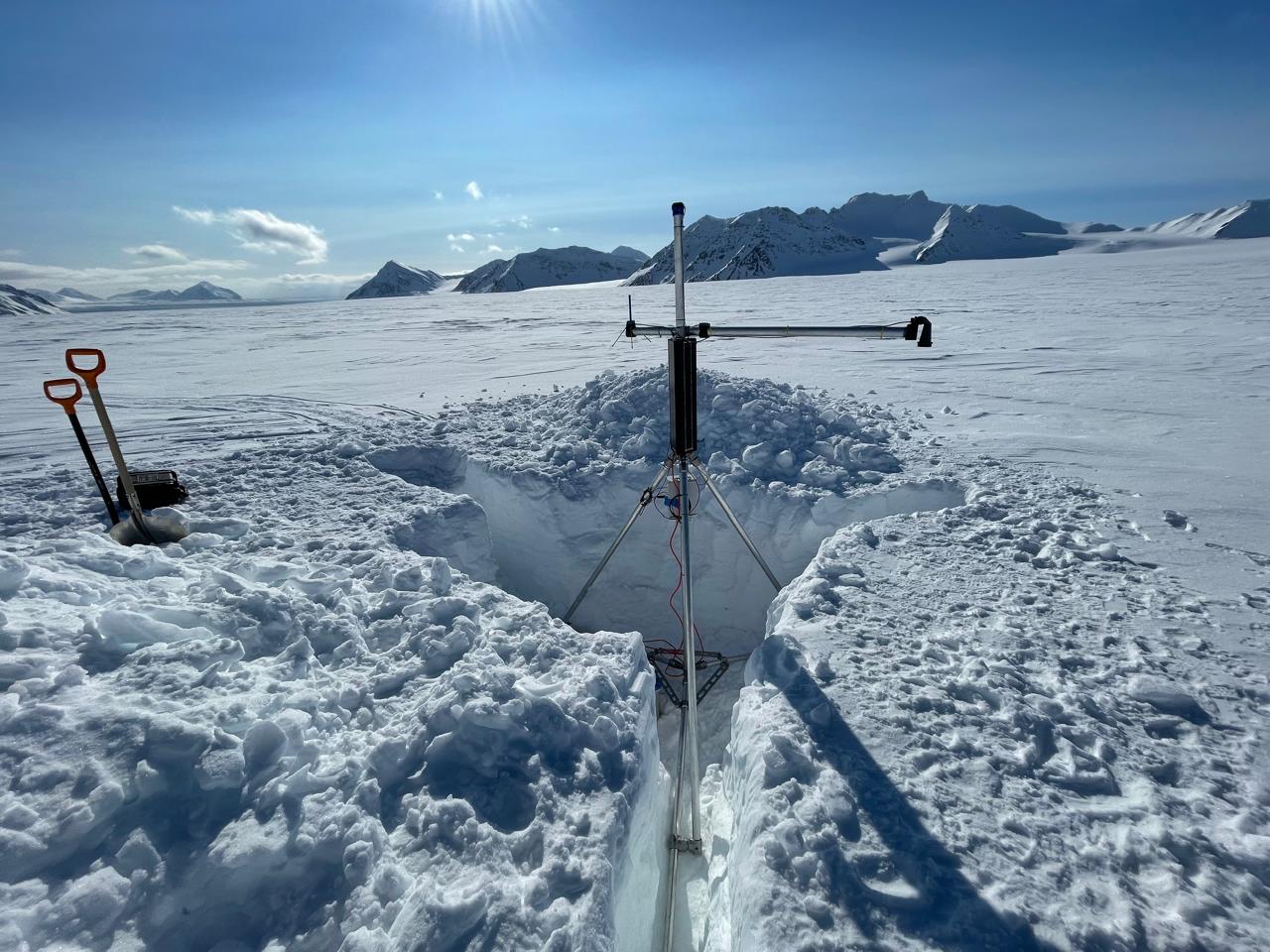
The project ensures the continuous operation of automatic glaciological stations installed on Hansa Glacier as part of the AUTOSTAKE project. It provides uninterrupted functioning of the equipment, real-time data transmission to involved institutions, and continuous monitoring of glacier dynamics. This allows for consistent observation of glacier mass balance and ice flow velocity, supporting research on climate change impacts in polar regions.
dr inż. Anna Neska
neskai@igf.edu.pl
Department of Magnetism
Project Leader: 28 125,00 EURO
Funding institution: SIOS – Luleå University of Technology
Project duration: 2024-2025
The Geomagnetic Observation Thematic Core Service (TCS) aims to consolidate the geomagnetic research community and break down barriers to data access by modernizing data archiving and distribution and developing new services for magnetotelluric data and geomagnetic models. It leverages high-resolution and large datasets to strengthen European collaboration in geomagnetic observations, enabled by the digital era. By upgrading archival systems and creating new data services, TCS Geomagnetic Observations enhances accessibility to geomagnetic data, supports scientific research, and fosters cooperation across European institutions. This initiative provides a foundation for improved geomagnetic modeling and facilitates broader use of geomagnetic observations for science and society.
prof. dr hab. Mariusz Majdański
mmajd@igf.edu.pl
Department of Geophysical Imaging
Project value: 1 249 900,00 PLN
Funding institution: National Centre for Research and Development (NCBR)
Project duration: 2025-2027
Project type: development and implementation
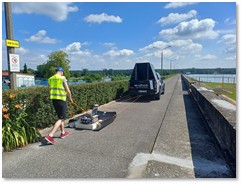
The project aims to conduct a series of research and development projects by Widmo Spectral Technologies Sp. z o.o. in the field of single-antenna, polarimetric FMCW (Frequency Modulated Continuous Wave) InSAR ground-penetrating radar technology for mapping and monitoring underground geological layers and mining infrastructure. The primary goal is to develop an innovative tool that will enable accurate and effective identification of geological and anthropogenic structures, as well as the detection and warning of sinkholes and landslides, with the ability to penetrate to depths of up to 60 meters, depending on the GPR type, or up to 200 meters for a GPR equipped with a single-polarization antenna.
The project focuses on two main areas of development, and the existing gap in the market for this type of solution motivates cascaded and parallel research on hardware, processing algorithms, and interpretation of GPR data.
The first is the design of a broadband georadar capable of performing polarimetric measurements and characterized by high spatial resolution, which is essential for accurate mapping of geological formations and mining infrastructure.
The second area is the development of advanced algorithms for processing and interpreting polarization data recorded during measurements. The project plans to employ both deterministic algorithms and machine learning models.
Furthermore, as part of the development module, research equipment will be integrated with the developed algorithms, creating an efficient tool. The entire technology will be tested by the Consortium member – IGF PAN – during field tests to confirm its effectiveness and the quality of the mapping. This stage also involves extensive automation of the solution, from data collection and validation, through advanced analysis, to final visualization of results, enabling their understanding even by those without in-depth knowledge of geophysics.
prof. dr hab. Piotr Głowacki
pglowacki@igf.edu.pl
Department of Polar and Marine Research
Project value: 2 681 076,00 PLN
Funding institution: SIOS Svalbard integrated arctic earth observing system
Project duration: 2023-2027
The project aims to develop technical, organizational, and scientific capabilities for interdisciplinary research of natural phenomena in the Arctic, while harmonizing and standardizing monitoring networks. Arctic research naturally combines efforts from physical, natural, and engineering sciences, with results influencing fields such as medicine, new technologies and materials, as well as humanities and social sciences. Establishing an integrated system for long-term measurements on Svalbard is crucial for open and comprehensive use of data by international research teams. The project also ensures that these observations benefit broader societal and economic sectors, supporting informed decision-making and sustainable development in polar regions.

dr Bartłomiej Luks
luks@igf.edu.pl
Department of Polar and Marine Research
Project value: 90 000 NOK
Funding institution: SIOS Svalbard intergrated arctic earth observing system
Project duration: 2023-2025
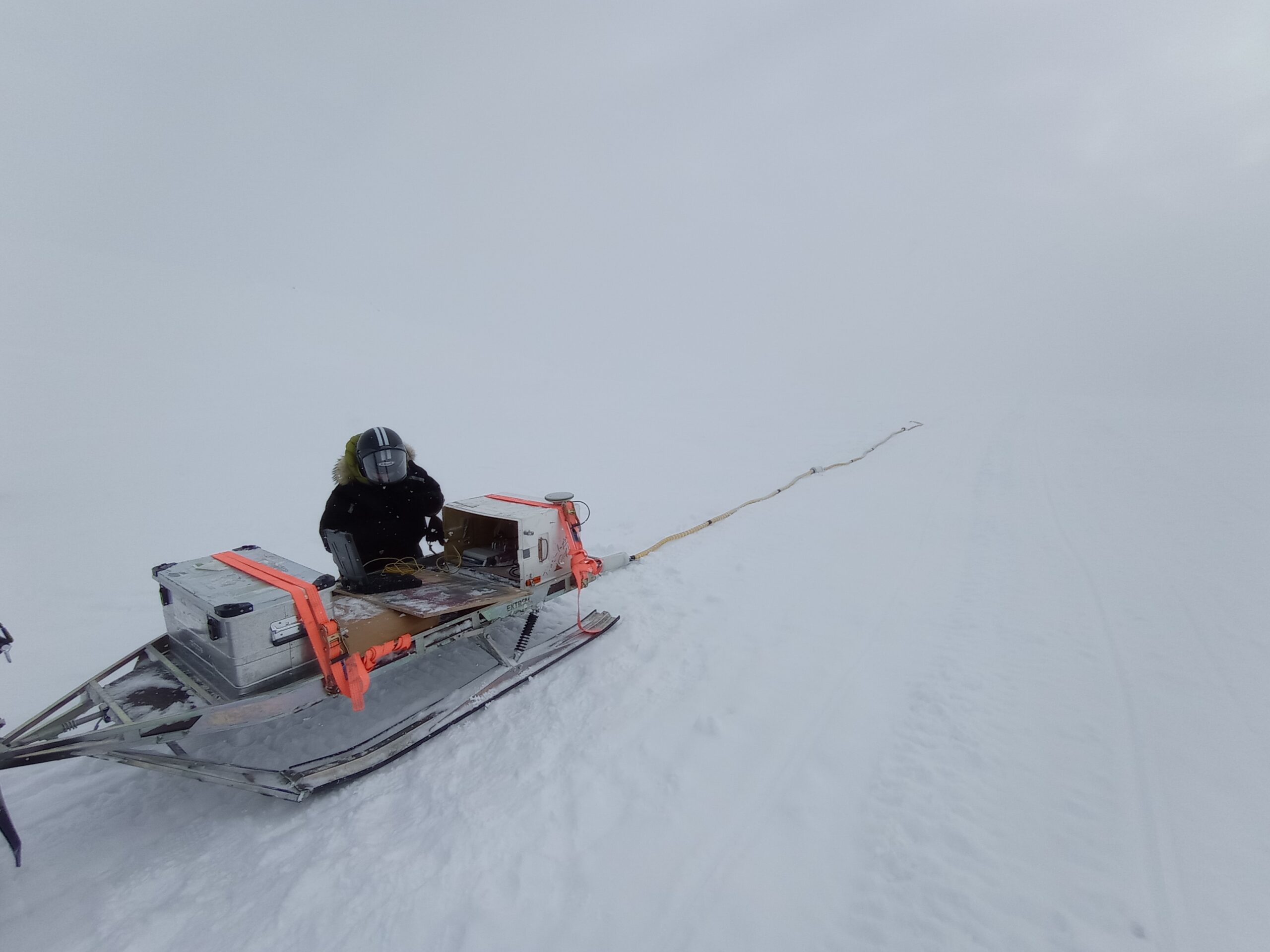
SnowInOpt transforms Svalbard into a superstation for snow measurements, supporting the calibration and validation of satellite snow observations. The project develops standardized measurement methods, automated GPR data analysis, and provides FAIR data through the SIOS system for the scientific community.
dr hab. Michael Nones
mnones@igf.edu.pl
Department of Hydrology and Hydrodynamics
Project value: 923 845,00 PLN
Funding institution: National Centre for Research and Development (NCBR)
Project duration: 2023-2025
EcoC2S develops a holistic approach to flood risk assessment, quantifying the contribution of natural systems and blue-green infrastructure to flood protection in transitional and coastal areas. The project supports the design and implementation of resilience pathways based on ecosystem services (ES), recognizing the added pressures from climate change on both natural systems and communities. Coastal and transitional systems provide natural flood protection, but climate impacts increase risk and demand innovative assessment, management, and community engagement strategies. EcoC2S establishes a two-level community of practice, bringing together project partners and external stakeholders to facilitate co-learning and co-design. This framework enables knowledge exchange at case study, inter-project, and EU levels, supporting the wider application of results internationally.
dr Bartłomiej Luks
luks@igf.edu.pl
Department of Polar and Marine Research
Project value: 71 000 NOK
Funding institution: SIOS Svalbard intergrated arctic earth observing system
Project duration: 2025-2027
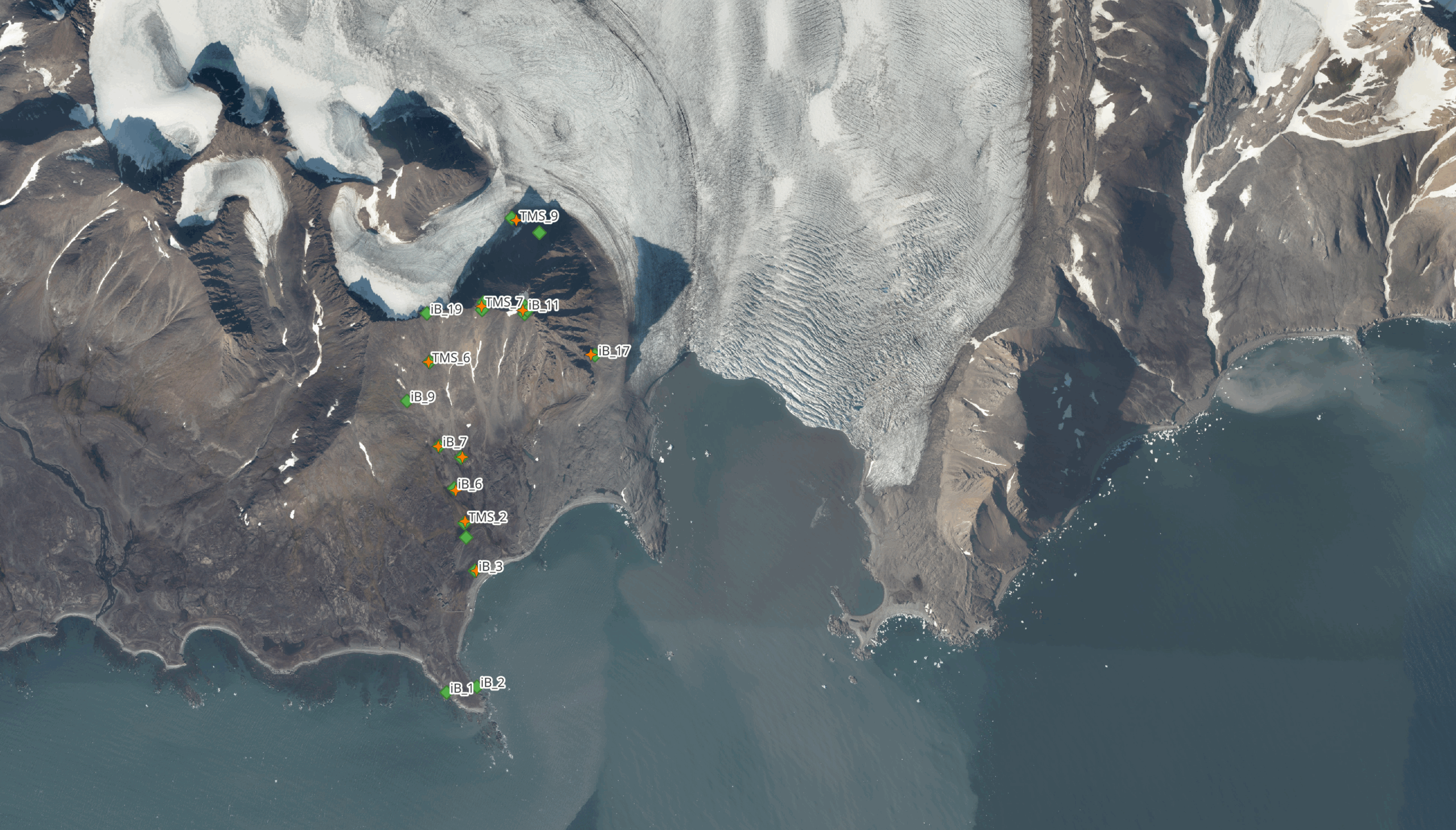
PATHS focuses on the increasing risk of rock slope failures (RSF) in Svalbard, driven by climate change and permafrost degradation. Despite potentially serious consequences for Arctic communities and infrastructure, Svalbard currently lacks a comprehensive risk assessment for this hazard. The project addresses this gap through three main activities: expert workshops to assess RSF potential and research needs, the creation of the first permafrost monitoring network on steep slopes in Svalbard and Disko Island (Greenland) to measure soil temperature and moisture, and a preparatory study to lay the groundwork for larger future risk assessment initiatives. PATHS is coordinated by the Department of Geophysics, University of Oslo, in collaboration with NGU (Norway), IGF PAS (Poland), and GEUS (Denmark).
prof. dr hab. Marzena Osuch
osuch@igf.edu.pl
Department of Hydrology and Hydrodynamics
Project value: 154 260 NOK
Funding institution: SIOS Svalbard intergrated arctic earth observing system
Project duration: 2025
Surface and groundwater in the Arctic are rapidly changing due to strong climate warming. The Barents Sea region, including the Svalbard archipelago, is experiencing exceptional warming and the fastest glacier mass loss since the Little Ice Age, making it a unique laboratory for studying climate impacts on glacial environments. Permafrost thaw has increased the active layer thickness, formed taliks, and enhanced groundwater flow into surface waters, strengthening the connection between subsurface and surface hydrology. Continuous monitoring in Svalbard has revealed year-round taliks and evidence of suprapermafrost and intrapermafrost groundwater, highlighting the urgent need to better understand and quantify these interactions. Comparing hydrological systems across locations like Bayelva and Hornsund helps to assess water resource dynamics and the evolving Arctic hydrological regime.
mgr Anna Leśnodorska
alesnodorska@igf.edu.pl
Department of Seismology
Project value: 27 500 EURO
Funding institution: European Research Executive Agency (REA)
Project duration: 2025-2026

AH ICS-D is a project funded under the Sponsored Research Activities (SRA) grant by EPOS ERIC. Its goal is to integrate the EPISODES Platform (episodesplatform.eu) with the EPOS Platform (ics-c.epos-eu.org) through the development of a Virtual Research Environment (VRE) supported by the TCS AH – EPISODES infrastructure. The project will expand the EPOS catalog with a wide range of new, multidisciplinary services offered by the TCS AH community and improve data exchange across different EPOS scientific domains and Earth sciences disciplines. It will also enable TCS AH users to access data provided by other thematic services (TCSs) integrated within EPOS. The project builds on previous SRA results, including the integration of ICS-D prototypes with ICS-C and the application of machine learning for the EPOS portal.

dr Dominika Niezabitowska – Śliwka
dniezabitowska@igf.edu.pl
Department of Magnetism
Project value: 102 000 PLN
Funding Institution: National Agency for Academic Exchange (NAWA)
Project duration: 2024-2025
Paleomagnetic data from the Baltic Sea sediments allow the study of geomagnetic field history and environmental changes. Biogenic and diagenetic processes, including greigite formation, influence the magnetic record and serve as indicators of past redox conditions. Magnetic analyses enable distinguishing the origin of greigite and reconstructing climate and environmental changes in Holocene sediments.